The client needed to assess the condition of a concrete slab at the Taza electrical station, which meant cutting core samples out of it. Before that could happen safely, the reinforcement had to be found.
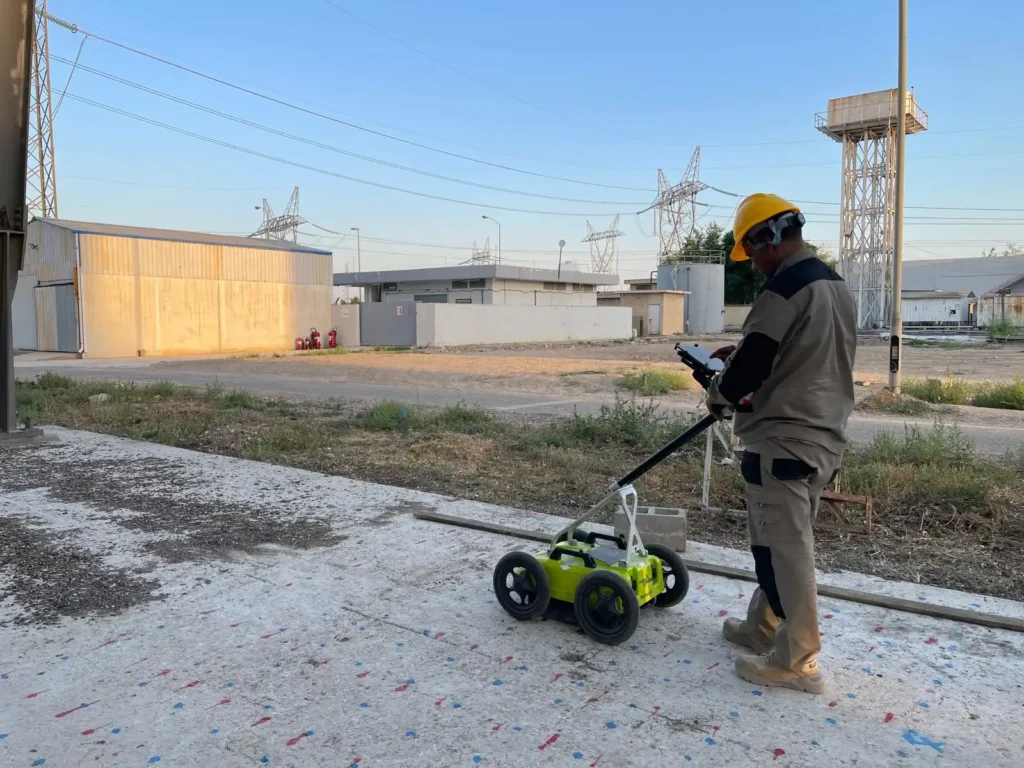
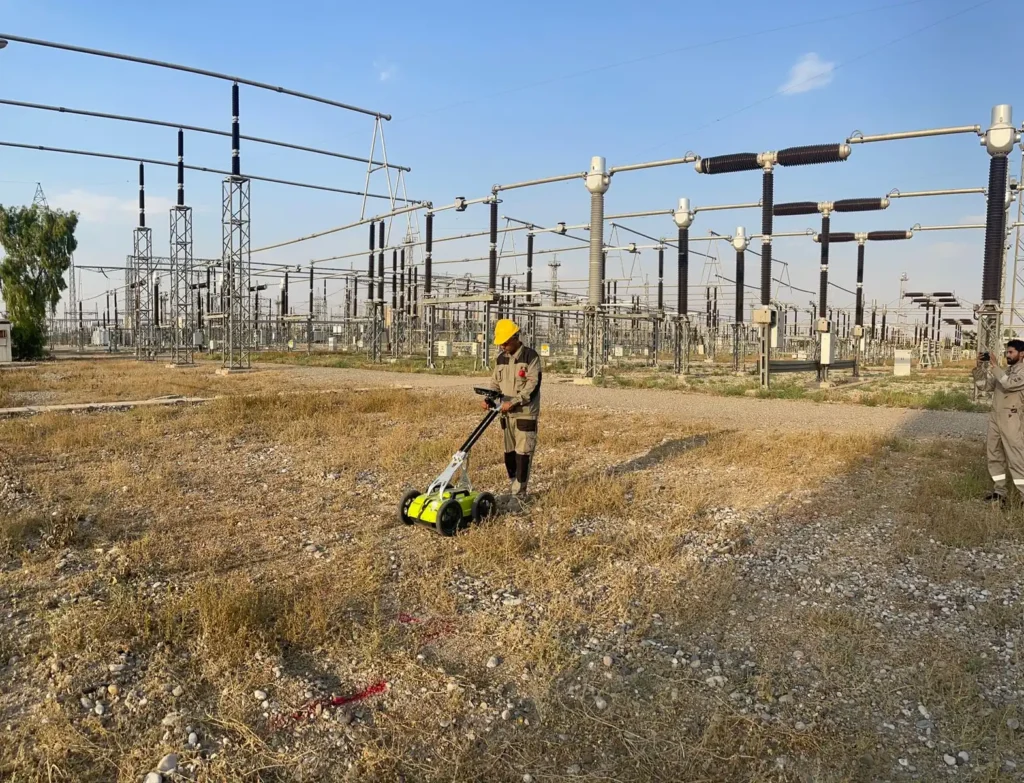
An ImpulseRadar PinPoint system with an 800 MHz antenna was run across the slab. A high frequency is the right choice for concrete: it gives the fine resolution needed to separate individual bars within a shallow slab, at the cost of a penetration depth that concrete work does not require.
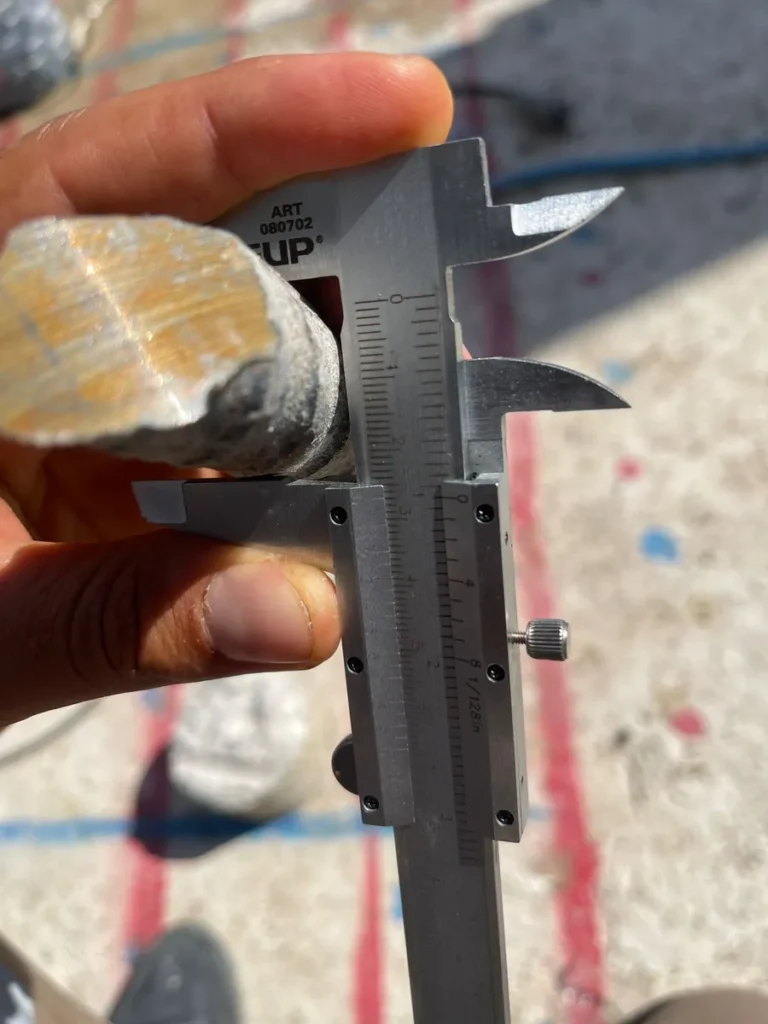
The full rebar mesh was mapped and marked directly onto the slab surface — bars running in one direction in red, the perpendicular set in blue — together with the position and diameter of the reinforcement.
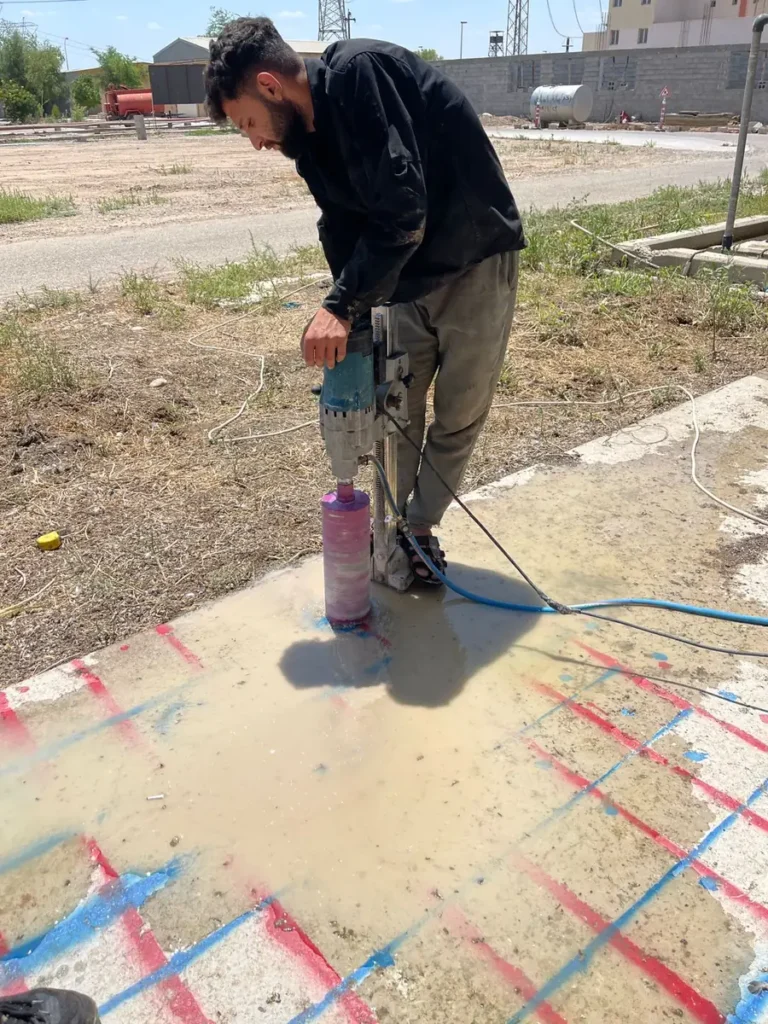
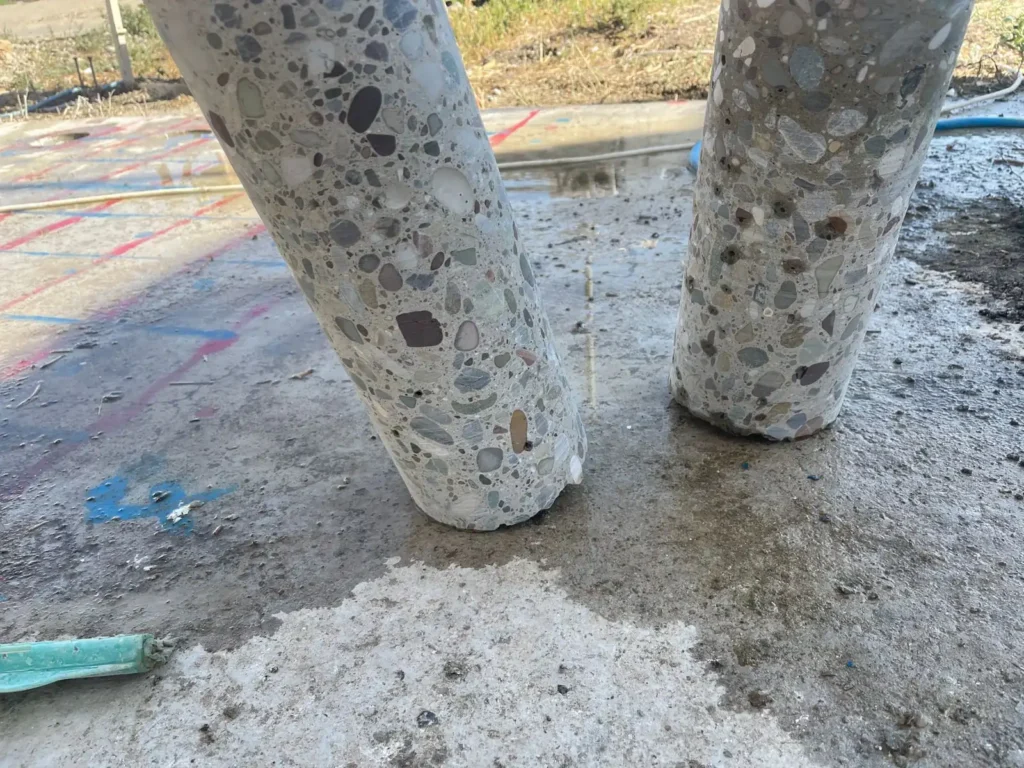
That grid is what made the coring possible. Five core samples were then cut from the clear spaces between the bars and sent for further testing, with no reinforcement damaged in the process. Cutting a core through a bar weakens the slab exactly where the client is trying to assess its strength, and it is entirely avoidable with a scan first.
Running the 800 MHz GPR antenna across the marked concrete slabCutting a core sample from a clear space between the marked reinforcement barsTwo extracted concrete cores standing on the surveyed slabMeasuring the diameter of reinforcement recovered from a core with a vernier caliper
Five areas of a live electrical station in Kirkuk scanned with both GPR and an RD8200 locator to find and delineate buried pipes and cables, with every result georeferenced.
Hydrogeological survey with the Iraqi Red Crescent to evaluate groundwater contamination across the middle Euphrates provinces, including pumping tests and water analysis.